
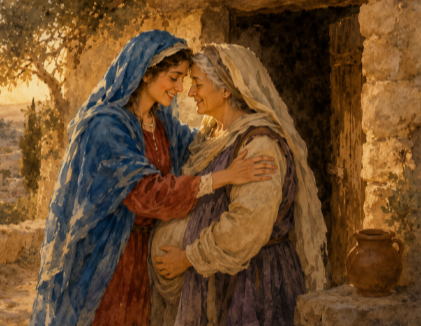
The Sovereign Anchor: How a Catholic Military Chaplain Applies the Magnificat to Uniformed Service
In the rigid hierarchy of military life, where rank determines authority and operational demands test the limits of human endurance, an ancient prayer continues to provide a surprisingly relevant framework for ministry. Mary's Magnificat—traditionally regarded as a hymn of praise recorded in Luke 1:46–55—serves not merely as devotional poetry but as a practical guide for military chaplaincy in the modern era.
For a military chaplain, colloquially known across the services as the Padre, the Magnificat offers a dual lens through which to engage military life: anchoring individuals in a reality greater than themselves while safeguarding the dignity and worth of every person, regardless of rank or appointment.
Far from being a passive piece of liturgy, the Magnificat provides a blueprint for spiritual resilience, ethical leadership, and compassionate care in some of the most challenging environments on earth.
Amplifying the Overlooked: Ministry to the Lowly
Mary proclaims that God "has lifted up the lowly. "Within military organisations, authority and influence are carefully structured through rank, appointment, and experience. Yet those at the lower end of the hierarchy—recruits, trainees, junior sailors, soldiers, and aviators—often bear significant pressures while possessing little institutional power.
The military chaplain embodies the spirit of the Magnificat by deliberately investing time in those who might otherwise go unnoticed.
The Ministry of Presence
Chaplains do not simply wait in offices for personnel to seek them out. They accompany service members where they live and work: on rifle ranges, in training areas, aboard ships at sea, in the hangars, and on deployed operations. Their presence communicates a powerful message—that every individual matters.
Levelling the Playing Field
In the chaplain's office, tent, or informal conversation space, rank becomes secondary. The newest recruit receives the same attention, respect, and confidentiality as the most senior commander. This intentional levelling reflects the Magnificat's vision of a God who sees human worth beyond status, title, or privilege.
By creating safe spaces for honest conversation, the chaplain helps personnel navigate isolation, self-doubt, moral uncertainty, and the immense pressures associated with military service.
A Sovereign Counterweight to Power and Pride
Mary also sings of a God who "has scattered the proud" and "brought down rulers from their thrones." These words provide an important reminder within an institution that necessarily entrusts significant authority to its leaders.
Military leadership demands decisiveness and strength. However, authority left unchecked can contribute to toxic command climates, poor decision-making, and moral injury.
Ethical Advice to Command
Military chaplains occupy a unique position within the chain of command. While they do not exercise command authority, they serve as trusted advisers to commanders on matters of morale, ethics, culture, and personnel welfare.
This role allows chaplains to provide perspectives often unavailable through formal reporting mechanisms.
Speaking Truth to Power
Inspired by the prophetic themes of the Magnificat, the chaplain becomes a moral conscience within the unit. Through respectful and confidential engagement, they encourage leaders to exercise authority with humility, compassion, and accountability.
Rather than challenging command for its own sake, chaplains help leaders remain mindful of their profound responsibility to care for those entrusted to them. In doing so, they strengthen both ethical leadership and operational effectiveness.
Delivering Spiritual and Emotional Substance to the Hungry
The Magnificat declares that God "has filled the hungry with good things." While military personnel rarely face literal hunger in contemporary service, many experience deep emotional, psychological, and spiritual deprivation.
Operational stress, prolonged separation from family, grief, trauma, uncertainty, and fatigue can leave even the most resilient individuals searching for meaning and hope.
The chaplain's mandate is to ensure that those starving for purpose, encouragement, or understanding are never turned away empty-handed.
Whether through pastoral conversation, crisis intervention, prayer, mentoring, or simply listening without judgment, chaplains provide vital emotional and spiritual sustenance. They help personnel process life's most difficult experiences while reinforcing the values, relationships, and beliefs that sustain long-term resilience.
Anchoring Resilience in Eternal Promises
At its heart, the Magnificat is a song of resilience. Mary speaks from a position of profound vulnerability, yet her confidence rests not in circumstances but in the enduring faithfulness of God.
This perspective is particularly relevant for military chaplaincy.
Deployment often places chaplains alongside personnel confronting instability, conflict, tragedy, and human suffering. In such environments, the chaplain's role is not merely to solve problems but to embody a calm and steady presence amid uncertainty.
By praying and living the values expressed in the Magnificat, chaplains remind military personnel that human dignity transcends circumstance and that hope can endure even when situations appear overwhelming.
Their presence communicates that while governments, institutions, and geopolitical realities may shift, mercy, justice, and compassion remain enduring foundations for the human spirit.
More Than Welfare: A Vital Operational Asset
The Magnificat ultimately reshapes the understanding of military chaplaincy. It presents the chaplain not simply as a welfare provider or religious specialist but as a guardian of human dignity within the military profession.
Through ministry to the overlooked, ethical engagement with leadership, compassionate care for the wounded, and steadfast hope in times of uncertainty, chaplains contribute directly to the moral and emotional strength of Defence personnel.
In the field, at sea, on air bases, and during deployments around the globe, Mary's ancient hymn continues to serve a modern purpose. It equips military chaplains to become a sovereign anchor amid turbulence—a non-anxious presence that strengthens resilience, promotes ethical leadership, and keeps the flame of hope alive in the most demanding environments on earth.
The Magnificat therefore remains far more than an ancient prayer. Within the Australian Defence Force, it becomes a living operational framework for ministry, ensuring that compassion, justice, and human dignity are never casualties of service.
Personal reflection on the Magnificat prayer and how it relates to the life of a military chaplain by a Defence community family member: Julie Merrick
MAGNIFICAT PRAYER
My soul proclaims the greatness of the Lord,
my spirit rejoices in God my Savior,
for he has looked with favor on his lowly servant.
From this day all generations will call me blessed:
the Almighty has done great things for me,
and holy is his Name.
He has mercy on those who fear him
in every generation.
He has shown the strength of his arm,
he has scattered the proud in their conceit.
He has cast down the mighty from their thrones,
and has lifted up the lowly.
He has filled the hungry with good things,
and the rich he has sent away empty.
He has come to the help of his servant Israel
for he has remembered his promise of mercy,
the promise he made to our fathers,
to Abraham and his children forever.
Glory to the Father and to the Son and to the Holy Spirit,
as it was in the beginning, is now, and will be forever. Amen.
Please refer to the link below:
https://www.vaticannews.va/en/prayers/the-magnificat.html